Why You Fall Asleep Fine and Wake Up at 3 a.m.
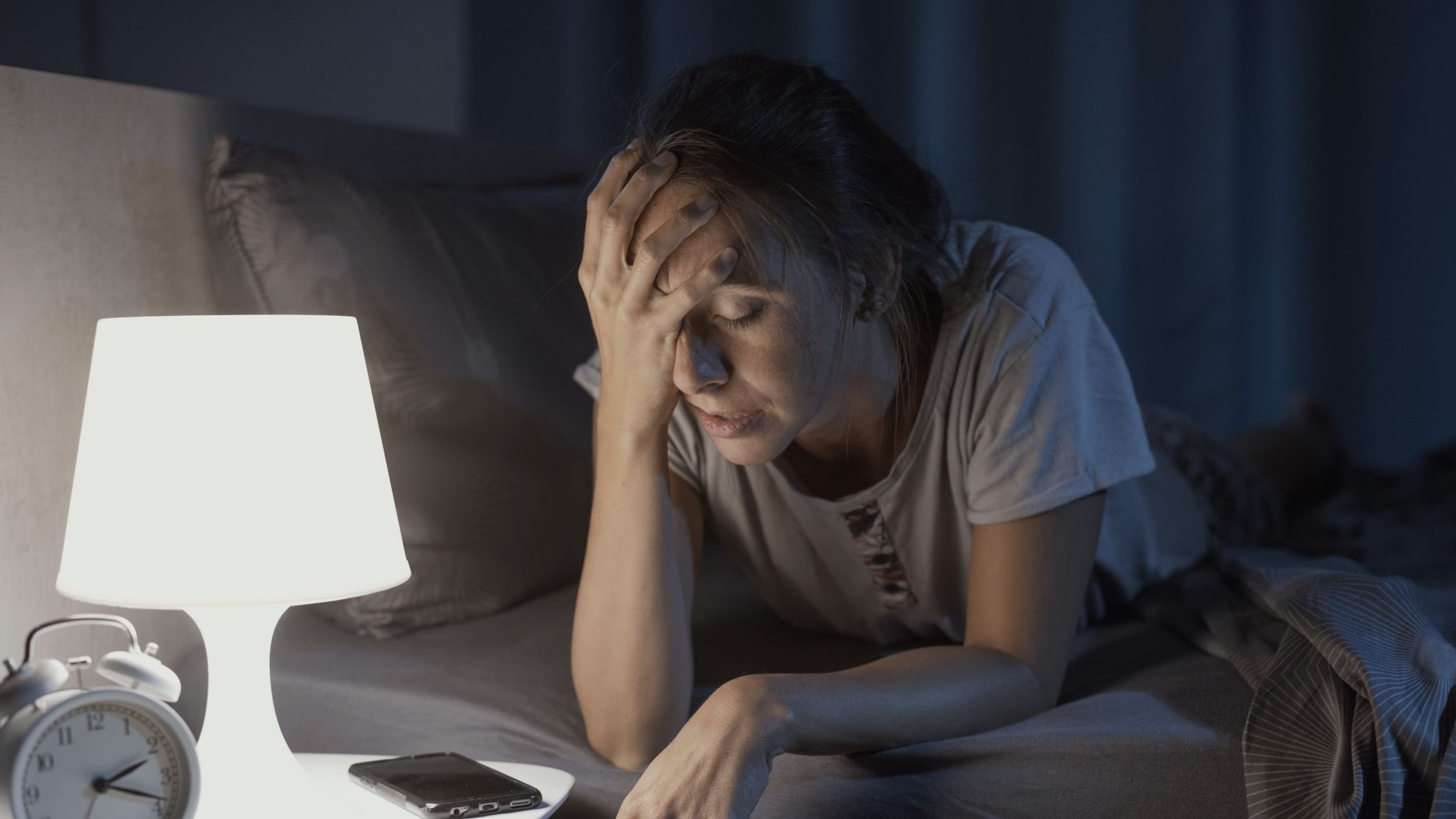
There is a specific kind of sleep complaint I hear more than any other, and it almost always comes with the same disclaimer. "I don’t have trouble falling asleep. I’m out in five minutes. It’s just that I wake up at 3 a.m."
People say this apologetically, as though it disqualifies them from having a real sleep problem. It doesn’t. It might be insomnia and it’s not uncommon with my clients. It also has a specific explanation, which I want to walk through, because once you understand what’s happening at 3 a.m., the whole thing becomes less mysterious and considerably less frightening.
Falling asleep was never your problem
Here is why you drop off so fast. By eleven or midnight, you’ve been awake for sixteen or seventeen hours, and you’ve probably been running hard for most of them. The biological drive for sleep, which builds the entire time you’re awake, is at its peak. You’re carrying so much sleep pressure that your brain shuts down almost the moment you stop giving it something to do.
That isn’t usually good sleep. That is a system so depleted it has no choice. Falling asleep the instant your head hits the pillow is, in most of the people I see, a sign of exhaustion rather than of healthy sleep.
Then, over the next three or four hours, you spend that pressure. The deepest sleep of the night happens early. By 3 a.m. the drive that knocked you out is largely used up, and the sleep you’re in is lighter and easier to interrupt. This is true for everyone. It is normal sleep architecture, not a defect.
What is actually happening at 3 a.m.
Everyone wakes up briefly several times a night. Most people don’t remember it, because they roll over and are back asleep in under a minute. The waking itself is not the problem. It’s what happens in the ten seconds after.
A few things line up in the early hours. Sleep pressure is low. The body's stress hormone system, which is at its quietest around midnight, starts its natural climb toward morning somewhere in the small hours. And if you’ve been stressed, that climb starts earlier and rises steeper, because your system has been primed to treat every new day as a threat that needs to be met at full readiness. So a brief, normal awakening that would have been unremarkable a year ago now lands on a brain that is already partway toward alert.
The first thing most people do at that point is check the time. I would like you to notice that this is a decision, even if it doesn’t feel like one. And it’s the decision that starts the rest.
Why you cannot fall back asleep
The clock says 3:12 a.m. You immediately do the math on how much sleep you can still get if you fall asleep right now. Then you think about the deposition, or the filing, or the meeting with the partner, or the fact that this is the fourth night in a row and you have a full day tomorrow and you cannot afford to be this tired again. Your heart rate comes up a little. And now you’re not a person who woke up briefly. You’re a person who is awake, in bed, working.
This is the mechanism. The waking is biological and mostly harmless. The staying awake is learned, and it is learned fast.
Once you have spent enough nights lying in bed at 3 a.m. thinking, your brain starts to associate that bed, at that hour, with thinking. It becomes a conditioned response. You wake, you register where you are, and the machinery starts up before you have consciously decided anything, in the same way you start salivating in a good restaurant before the food arrives. That is why the problem tends to get worse over months rather than better, even when the original stressor has passed. The trial ended, the deal closed, and you are still waking at three, because the bed has been reclassified.
Then there’s the second layer, which is the anxiety about the sleep itself. You start dreading the 3 a.m. waking before it happens. You go to bed slightly braced. You wake up and the first feeling is not grogginess but a small, sharp "oh no, not again." That feeling is a stress response, and stress responses are not compatible with sleep. So the thing you’re afraid of produces the very state that keeps it going.
I am a former attorney. I passed the California Bar and practiced employment defense litigation before I became a therapist, and a large part of my practice is still lawyers. I mention this because the mind that makes someone good at that job, one that is trained to anticipate problems, run through the worst-case version, and never be caught unprepared, is the exact mind that has the most trouble with a quiet, dark room at 3 a.m. It does not have an off switch. Give it nothing to do and it will find something.
When 3 a.m. waking is a symptom of something else
Most of the 3 a.m. waking I see is the learned pattern I just described, and it responds to treatment aimed at that pattern. But before I treat anyone's sleep, I want to know whether the sleep is the whole story, because often it’s not.
Early morning waking is a classic feature of depression, particularly the kind that doesn’t look like sadness. If you’re waking at four and lying there flat, with a sense of dread that has no object, and the mornings are the hardest part of the day, I want to talk about what is going on underneath the sleep, because treating the insomnia alone will not hold.
Anxiety and insomnia run in both directions. If your 3 a.m. thoughts are specific and urgent, replaying a conversation, rehearsing a confrontation, scanning for the mistake you are sure you made, then the waking is downstream of an anxiety pattern that is running during the day too, and I would treat both.
Burnout produces a particular and maddening version of this: wired and exhausted at the same time. You are too tired to function and too activated to sleep, and the 3 a.m. waking often comes with a kind of grim, numb wakefulness rather than active worry. If that sounds familiar, burnout is worth looking at directly.
And there are medical causes I am not going to pretend a therapist can fix. Alcohol in the evening reliably produces exactly this pattern: fast sleep onset, then a rebound awakening a few hours later as it wears off. Sleep apnea, restless legs, thyroid problems, reflux, and certain medications all disrupt the second half of the night, and perimenopause is a common and underdiscussed cause of new-onset 3 a.m. waking in women in their forties. If your history suggests any of these, I will say so, and I will send you for a medical workup before we do anything else. I would rather you have a sleep study than spend two months treating the wrong thing.
What to do tonight
I want to be careful here, because I don’t think a paragraph of tips fixes chronic insomnia, and I have written elsewhere about why sleep hygiene advice underperforms for people who have been dealing with this for months. But there are a few things that interrupt the specific 3 a.m. mechanism, and they are worth doing while you decide about the rest.
Do not look at the clock. Turn it around, put the phone face down in another room, whatever it takes. The number is what starts the arithmetic, and the arithmetic is what starts the stress response. If you don’t know whether it’s 2:40 a.m. or 4:15 a.m., you can’t calculate how much sleep you’re losing, and you’ll be surprised how much of the panic depends on that calculation.
If you’ve been awake long enough that you’re clearly awake, meaning your mind is running and you’re not drifting, get up. Go to another room, keep the lights low, and do something quiet and boring until you feel sleepy again. Then go back to bed. This feels counterproductive and it’s the single most useful thing you can do, because it stops teaching your brain that bed is where the thinking happens.
Do not go to bed earlier to compensate, and do not sleep in to catch up. Both of them lower your sleep pressure for the following night, which makes the next 3 a.m. waking more likely, not less. This is the trap most people are in by the time they call me. They’ve been doing everything a sensible person would do, and every one of those sensible things has made it worse.
Leave the phone alone. Not because of the blue light, which matters less than people think, but because your inbox at 3:00 a.m. is a direct line to the exact thoughts you are trying not to have.
What actually treats it
Chronic sleep maintenance insomnia has a specific, well-researched treatment. It’s cognitive behavioral therapy for insomnia, usually shortened to CBT-I, and major clinical guidelines recommend it as the first-line treatment for chronic insomnia before sleep medication is tried.
The core of it is counterintuitive. You keep a sleep diary for a couple of weeks, because almost everyone with insomnia misremembers their own sleep and I need real numbers. We calculate how much of your time in bed is actually asleep. Then we temporarily shorten your time in bed, on purpose, so that the sleep you do get consolidates into one block instead of being spread thinly across nine hours with a hole in the middle at three. As your sleep becomes more efficient, we expand the window back out.
For 3:00 a.m. waking specifically, this is the piece that does the work. If you’re in bed from 10:00 p.m. to 7:00 a.m. and sleeping six hours, there are three hours in that window with nothing to fill them, and your brain fills them at three. Compress the window and the gap closes. It is uncomfortable in the first couple of weeks, and I tell people that up front rather than letting them find out in day three, but it’s why the treatment works and why the gains tend to hold after it ends.
Alongside that we rebuild the association between bed and sleep, which is the formal version of the get-up-if-you-are-awake advice above, and we work on the 3:00 a.m. thoughts themselves, the catastrophizing about tomorrow and the arithmetic and the "I cannot do another day like this." If anxiety or depression or burnout is also in the picture, we treat that at the same time rather than pretending the sleep is a separate problem.
Most people finish in about 8-10 sessions. It works over video, and it is one of the better-studied treatments for remote delivery. If you want a fuller description of what the protocol looks like week by week, I have written that up separately.
If this has been going on for a while
The people who come to me for this have usually been living with it for a year or more. They have tried the magnesium and the tea and the app with the rain sounds and the rule about no screens after nine that lasted eleven days. They aren’t undisciplined. They’ve been applying discipline to a problem that doesn’t respond to discipline, because sleep is one of the few things in life that cannot be forced.
If you’re waking at 3:00 a.m. most nights and it’s been going on for more than 3 months, this may be chronic insomnia, and it’s worth treating as such rather than waiting for it to pass. If you also recognize yourself in the anxiety pattern, that has its own treatment, and the two are often done together.
I see clients by secure video in California, Washington, D.C., and Virginia, with evening availability, which matters for people whose entire problem is that their workday does not end. Sessions are also available in Spanish. You can read more about my background and the first step is a short consultation call where we talk about what your sleep looks like, what you’ve already tried, and whether CBT-I is the right fit or something else needs to happen first. You can schedule that here.